
Basil Khowaja
Computer Engineering student at Habib University | Class of 2026
VAPT & DevOps enthusiast
 View my THM profile
Hi there I am Basil!
I am a Computer Engineering senior at Habib University, Class of 2026.
My academic journey has been shaped by a strong focus on networks, IoT, and applied cryptography, particularly through my Final Year Project, Lightweight Cryptographic Framework for Secure IoT Communication. Alongside this work, I have developed a strong interest in software engineering and full-stack development.
I have built and deployed several web applications using React.js and Next.js, hosting them on AWS and integrating cloud services to create scalable, production-ready systems. In addition to web platforms, I have also developed Electron-based desktop applications for Windows and Linux, focusing on practical tools and user-oriented software.
My work also includes hands-on experience with Linux utilities, cloud infrastructure, and microcontroller platforms such as the ESP32. Beyond coursework, I have participated in research initiatives like the Summer Tehqiq Program and contributed to open-source projects.
This blend of academic rigor, applied research, hardware systems, and software engineering continues to shape my growth as an engineer focused on building secure, scalable, and real-world technology solutions.
Qualifications


Certifications
Work Experience
Below is the work experience of ~2 years I have got uptil now in my undergraduate journey at Habib University as a student of BS Computer Engineering.
Summer Tehqeeq and Research Program 2024
Selected by the Office of Research at Habib University for this paid project based on academic performance.
Research title: “Estimation of transmission line parameters using PMU measurements with bad-data detection.”
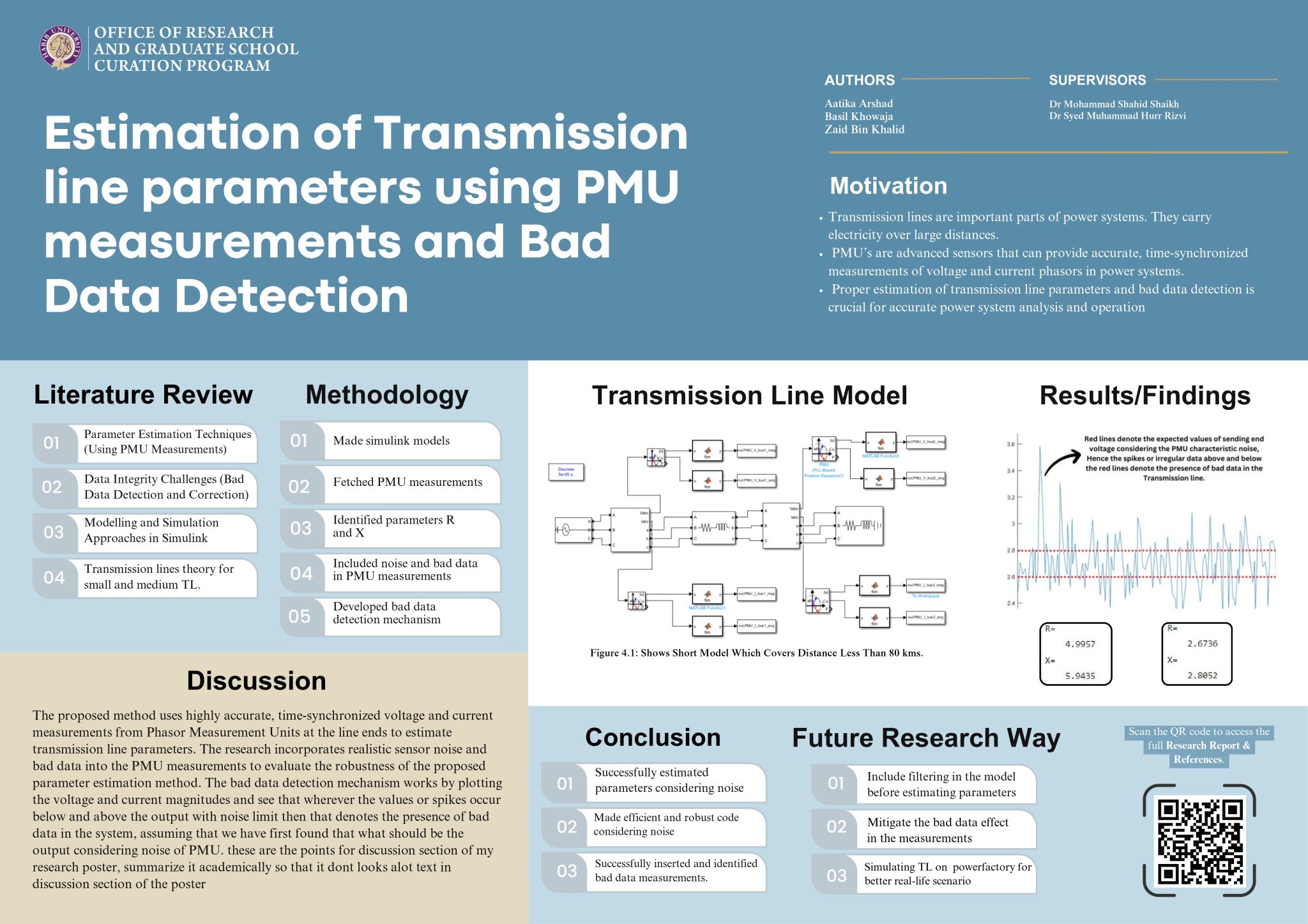
- Simulated TL models in MATLAB Simulink.
- Applied algorithms for parameter estimation.
- Developed a framework for bad-data detection using curated datasets.
- Bad-data identification success rate: 94.3%.
Summer Tehqeeq and Research Program 2025
Recently I got selected for this project under the stream of Summer Tehqeeq and Research Program
based on my performance in earlier projects.
Title of project: “In-house design and development of an IoT toolkit integrated with the cloud.”
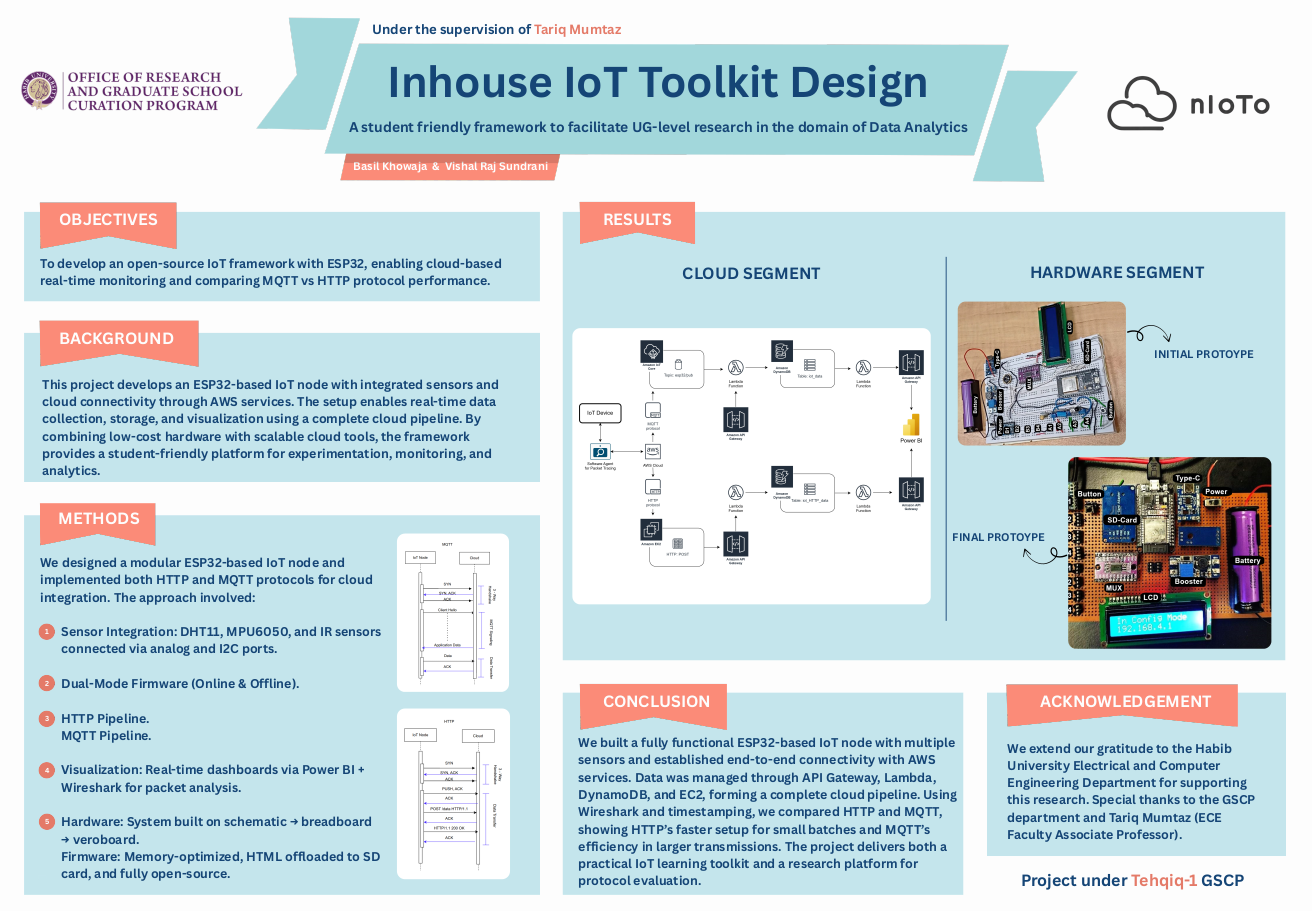
- Learnt IoT communication protocols.
- Interfaced real-world sensors on ESP32 for data collection.
- Deployed a full cloud segment for data storage and analytics on AWS.
- Integrated AWS Lambda, EC2, and DynamoDB with IAM-based access control.
- Enhanced security mechanisms for data transfer to AWS.
Woot Tech — Web & Cloud Deployment

- Currently building the company website.
- Deploying the site to cloud infrastructure.
- Managing updates and production releases.
Projects
Academic Projects
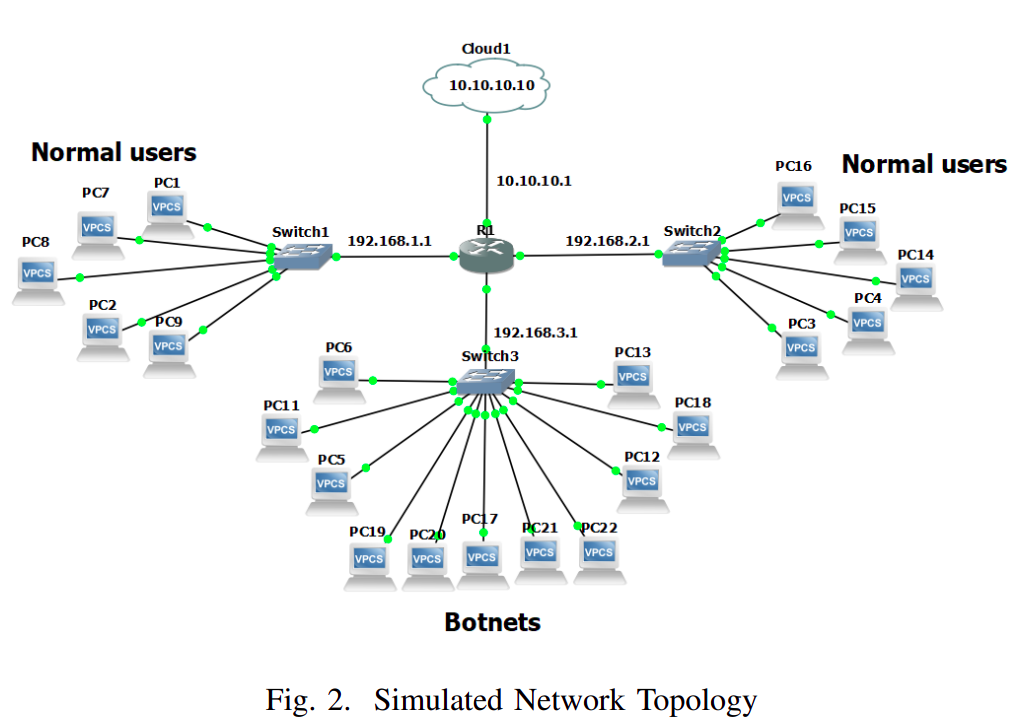
Simulating DDoS Attacks in Cloud Networks and Exploring AI Mitigation Techniques
Built botnets in GNS3 to simulate large-scale DDoS attacks on cloud-based infrastructures and measured their impact. Designed and deployed AI-based detection and mitigation techniques, enabling automated threat response and anomaly detection. The project reflects real-world security operations (SIEM/EDR) and strengthens incident response capabilities in cloud environments.
Key Skills: Cloud Security, Threat Simulation, AI-driven Detection, Incident Response, SIEM/EDR
GuardIoT:AWS-Based IoT Home Safety & Security System
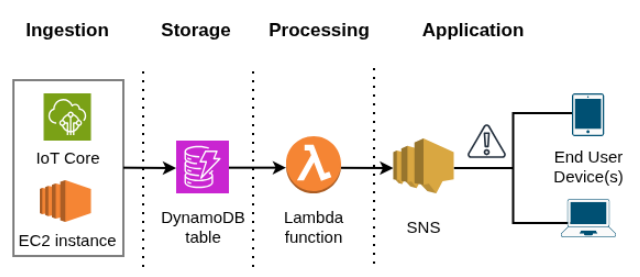
Designed and implemented a multi-hazard IoT home safety and security system using an ESP32-based edge node integrated with AWS cloud services. The system monitors fire, gas leakage, smoke, motion, environmental conditions, and abnormal vibrations, enabling real-time monitoring and automated alerts for safety-critical events.
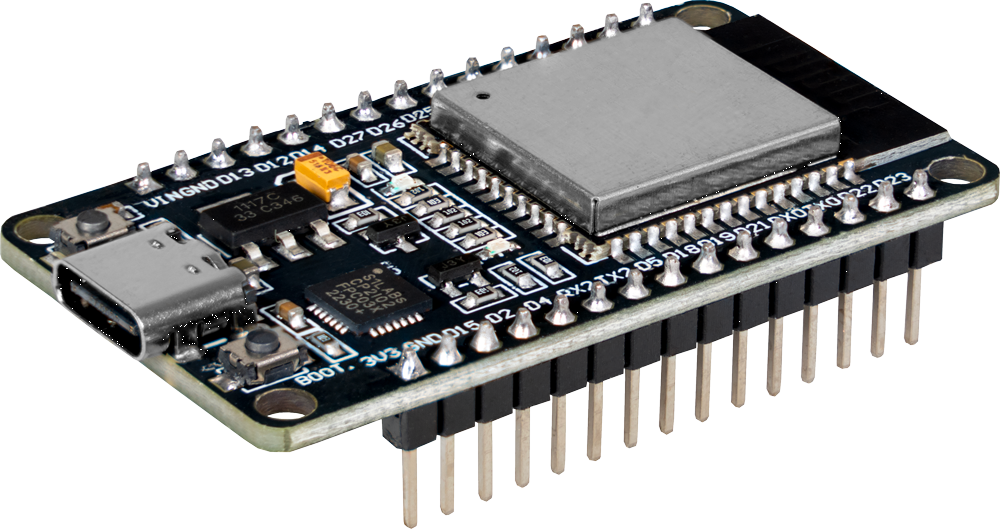
- ESP32-based multi-sensor node for home safety and security monitoring
- Fire, gas (LPG), smoke, motion, environmental, and vibration sensing
- Real-time data transmission to AWS using MQTT and HTTP over TLS
- Cloud-side processing and storage using AWS services
- Automated email alerts triggered during abnormal or hazardous events
- Centralized visualization of sensor data through cloud dashboards
AspidIoT: lightweight cryptography based VPN for IoT devices
Final Year Project (ongoing): Developing a modular cryptographic framework to secure IoT device-to-hub communication using lightweight algorithms such as ASCON, TinyAES, and SPECK. Implementing application-layer encrypted tunnels, cipher switching, and performance benchmarking for execution time and memory usage. The framework would implement a IAM-like access control, device authentication, and compliance-driven security design, aligning with NIST lightweight cryptography standard.
Key Skills: IoT Security, Lightweight Encryption, IAM Principles, NIST Compliance, Secure Tunneling.
Secure LWC VPN telemetry mesh for resource-constrained IoT nodes.
Side Projects
Alongside my academic work, I also build side projects that explore embedded tooling, infrastructure operations, and practical automation. BaudTide focuses on calm serial workflows for embedded development, Infratic on Linux server operations, and Wpify on structured WhatsApp automation through a production-style local control cockpit.

BaudTide
BaudTide is a calm Linux desktop serial monitor for ESP32, Arduino, and USB/TTY devices. Built with Tauri and React, it supports automatic port discovery, multi-port terminal workspaces, text and hexadecimal transmission, filtered live output, local raw-log capture, and exportable session logs for embedded development.

Infratic
Infratic is an Electron-powered desktop app for Linux operations that gives teams a faster way to manage servers over SSH from one interface. It brings service discovery, health checks, logs, metrics, deploy commands, and an embedded terminal into a single command center so operators can monitor systems and take action without constantly switching between tools.

Wpify
Wpify is a production-structured WhatsApp automation platform for Linux that combines a Next.js cockpit with a Node.js and Express backend. It supports queued sending, rule-based replies and forwarding, scheduled messages, activity logging, dashboard metrics, API-key protection, and persistent WhatsApp sessions so messaging workflows can be managed from one controlled local interface.
My Recent Achievements
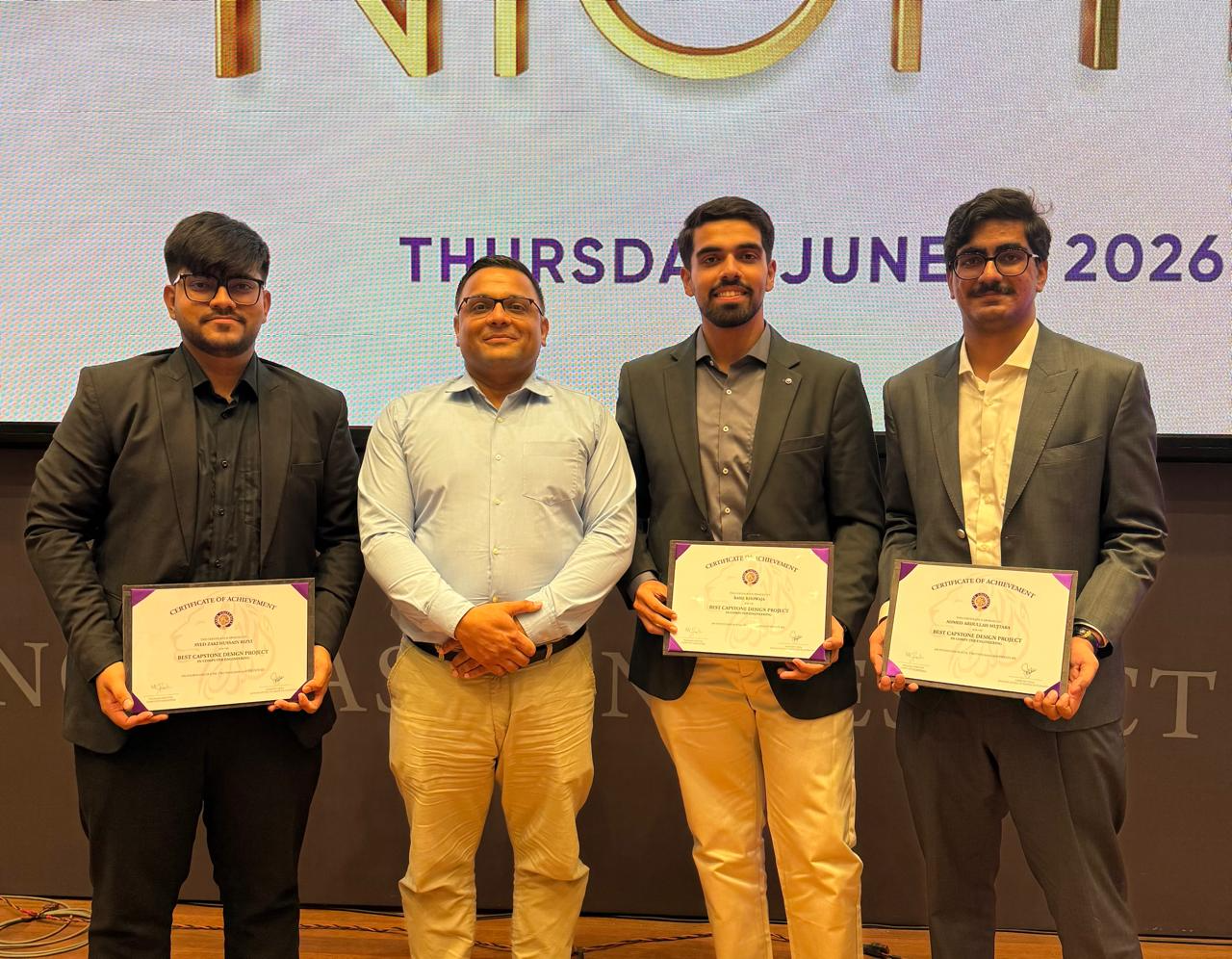
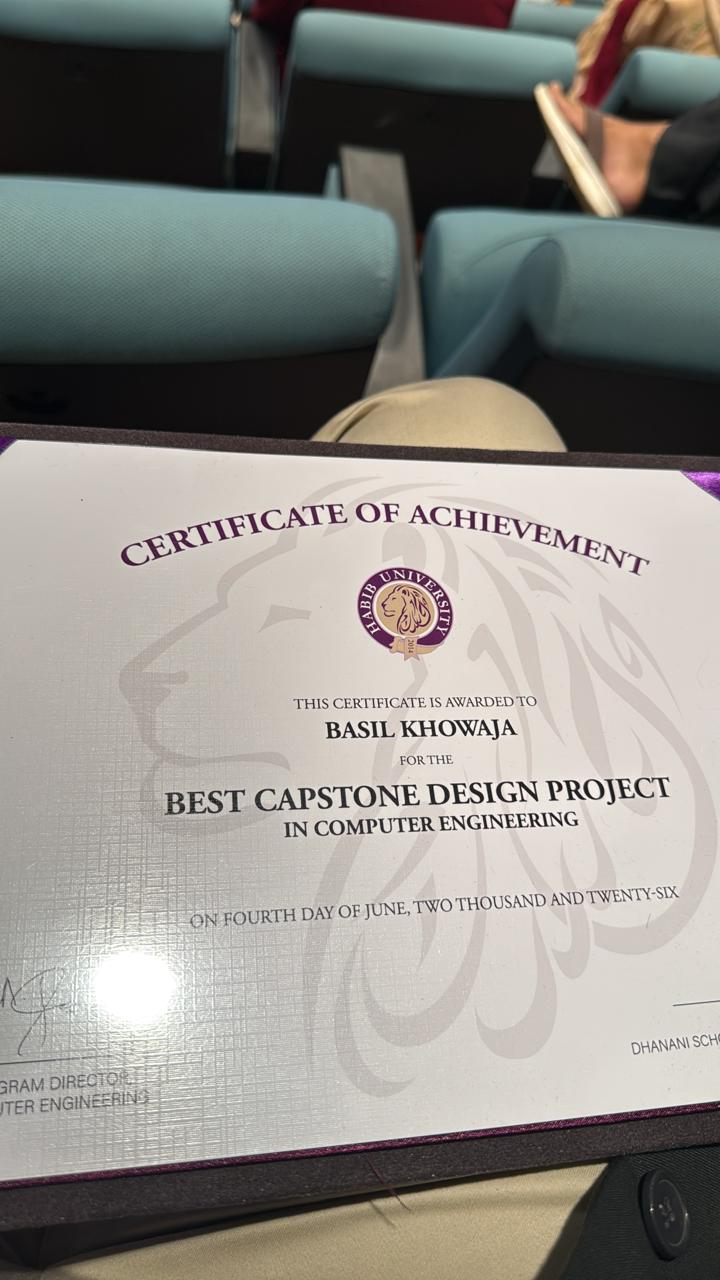
- Won Best Capstone Design Project for Computer Engineering from the Class of 2026 for my Final Year Project, AspidIoT.
- Implemented a custom lightweight VPN-style application protocol over TCP between ESP32 clients and a sink server.
- Built the secure session flow with PSK-HMAC authentication, X25519 key exchange, HKDF-SHA256 key derivation, HMAC-BLAKE2s checks, and ASCON AEAD encrypted telemetry.
- Created an end-to-end secure telemetry pipeline that authenticates devices, establishes encrypted sessions, and periodically refreshes session keys.
- Validated the prototype with multiple ESP32 devices to demonstrate secure, lightweight communication for resource-constrained IoT systems.
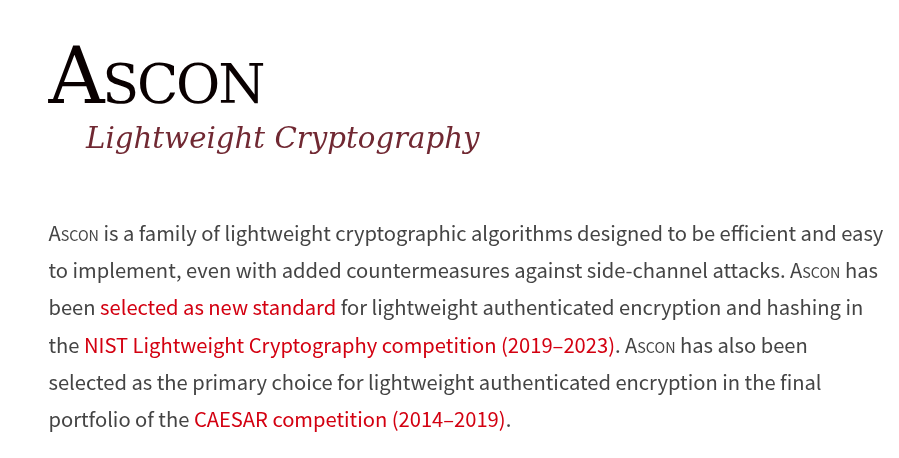
- Recently I became an official contributor for the ASCON LWC algorithm.
- Updated AEAD encrypt and decrypt routines in the official C implementation.
- Securely cleaned State and keys using a helper function to mitigate potential side-channel attacks.
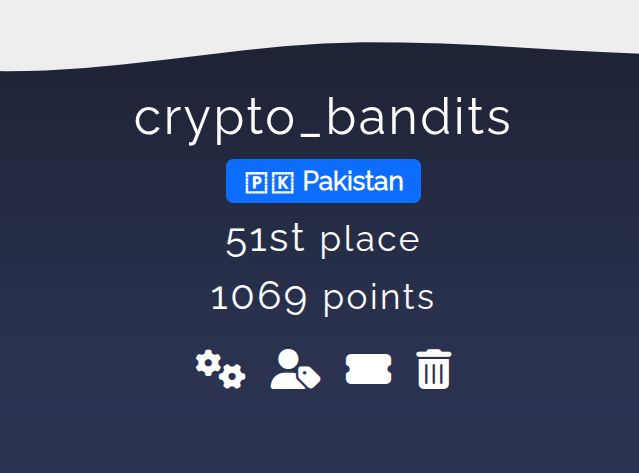
- Competed solo in GlacierCTF 2025 as Crypto_bandits in a highly competitive European cybersecurity CTF featuring 503 teams.
- Finished 51st overall with 1069 points, competing against a field made up largely of duo and squad teams.
- Solved Secret Sharing Platform, a 369-point cryptography challenge that only 28 teams cleared during the event.
- Recorded solves across cryptography, reverse engineering, web, pwn, and misc categories.
Publications

Evaluation of IoT Protocol Performance in a Cloud-Enabled Home Safety System
Accepted at ICOMET 2026, this paper evaluates and compares MQTT, HTTP, and CoAP in a cloud-enabled home safety system where an ESP32 edge node transmits data to AWS and the cloud layer generates real-time safety alerts.
- Accepted for presentation at The 5th International Conference on Computing, Mathematics and Engineering Technologies (ICOMET 2026).
- Compares the performance of MQTT, HTTP, and CoAP for IoT communication in a practical home safety system architecture.
- Builds on an implementation where an ESP32 sends sensor data to AWS, which then processes events and generates alerts.
- Highlights protocol-level tradeoffs relevant to cloud-connected safety systems, real-time monitoring, and dependable IoT design.